

Every roll on the mat tells a story. For dedicated practitioners who track every detail of their training journey, just like those using resources such as The Practitioner's Journal, the details matter. And few details matter more than what gets worn on the mat.
The weight of a BJJ gi is not just a number on a tag. It shapes how freely a grappler moves, how fast fatigue sets in, and how well the body performs when it truly counts.
Gi weight influences guard retention, takedown speed, mat transitions, and even stamina over the course of a long training session. Yet most grapplers pick up a gi without ever thinking about GSM ratings or fabric build.
What Does BJJ Gi Weight Actually Mean?
Gi weight is measured in GSM, which stands for grams per square meter. It reflects how dense and heavy the fabric is. The higher the GSM number, the heavier the gi feels on the body.
Most gis fall into three broad weight ranges:
Lightweight gis (350-450 GSM): These allow the most freedom of movement. Ideal for warm climates, long drilling sessions, and grapplers who prefer a quick, active game. The fabric breathes well and dries fast, making it easy to maintain and wear daily.
Middleweight gis (450-550 GSM): A solid balance between structure and comfort. These gis work well in most training settings and work well across a range of weather conditions. They hold up to regular use without adding too much bulk.
Heavyweight gis (550+ GSM): Dense, tough, and grip-resistant. These gis last a long time but tend to feel restrictive during fast, high-paced rolls. Grapplers often find that movement feels stiffer and fatigue builds faster when wearing them due to heat and restriction.
Understanding these ranges helps make a smarter choice based on training goals, gym climate, and comp rules.
How Gi Weight Directly Affects Mobility on the Mat
This is where the real difference shows. A heavier gi adds physical drag to every movement and a build up of heat. During a single round, it may seem minor. But across a full training session, that resistance builds up fast.
Here is what the gi weight directly impacts on the mat:
Guard work and range of motion: Lighter gis allow the hips, shoulders, and knees to move with less fabric resistance. For guard players who rely on sweeps, hip escapes, and leg movement, a lighter build makes transitions sharper and more fluid.
Takedowns and first-step speed: Explosive moves like double legs, single legs, and guard passes demand a quick burst of energy. A heavier gi creates drag during that burst, slowing down the initial drive and making takedowns harder to time.
Scramble speed: When positions break down, and both grapplers scramble for control, the grappler who moves faster tends to win the exchange. A lighter gi reduces the gap between thought and action, giving a clear edge in fast, dynamic moments.
Grip dynamics: A lighter gi gives the opponent fewer opportunities to lock in heavy collar-and-sleeve grips. Less fabric bulk means less material to grab, shifting the control battle in favor of the lighter gi wearer.
The Hidden Performance Cost of a Heavy Gi
Beyond raw movement, gi weight is directly linked to stamina. A heavier, denser fabric traps more body heat. As core temperature rises, the body works harder, breathing gets faster, and mental focus starts to slip.
In a one-hour session at a warm gym, a heavyweight gi can feel like wearing an extra layer of resistance the entire time. This is not just a physical problem. Heat clouds decision-making, slows reaction time, and makes it harder to recall technique under pressure.
Lighter gis allow air to pass through the fabric more freely. This keeps the body cooler, reduces fatigue, and lets the grappler stay sharp and focused from the first round to the last.
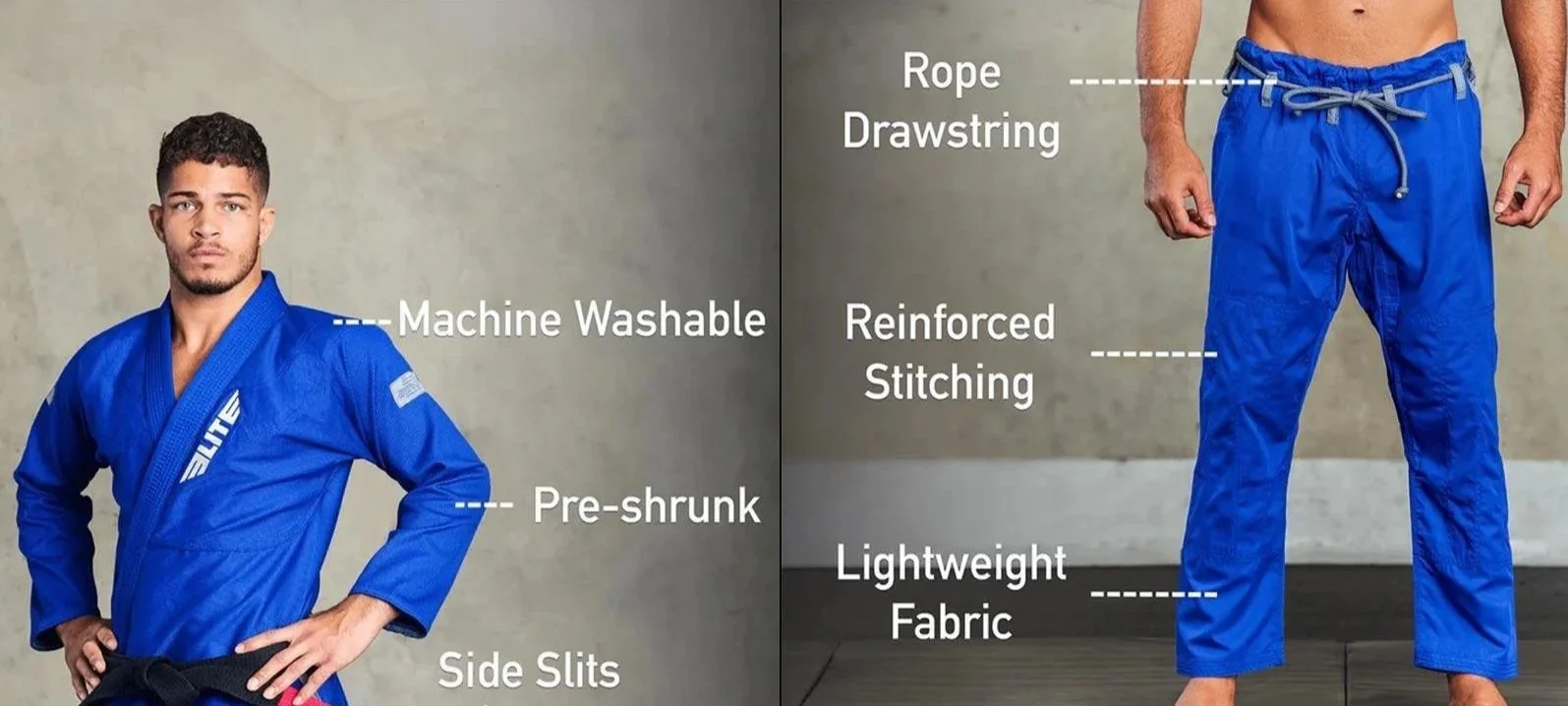
This is one reason the Elite Ultra Light Preshrunk White Adult BJJ Gi has become a trusted training option. Made from a 450 GSM Pearl Weave fabric, this gi is light, breathable, and built to keep movement unrestricted during intense rolls. It is also IBJJF approved, making it suitable for both daily training and tournament day.
Gi Weight and Competition: What Grapplers Need to Know
IBJJF rules set requirements for gi fit and fabric type, but do not put a cap on GSM. Even so, many competitors choose lighter gis for clear practical reasons.
A lighter gi offers several advantages on competition day:
Less total body weight at weigh-in, which is a real benefit when cutting weight before a tournament
Faster drying between rounds at multi-day events, keeping the gi fresh and regulation-compliant
Less drag during matches, which supports a more active, attacking style of game
For competitors, choosing a gi that is lightweight without giving up structure or durability is a key part of match-day prep.
Durability Vs. Weight: Finding the Right Balance
One concern with lighter gis is how long they last. Fabric that is too thin or loosely woven will break down fast under the stress of regular training, grips, and repeated washing.
This is why fabric build matters just as much as GSM rating.
Pearl Weave, for example, is one of the most trusted weave constructions in BJJ. It delivers a strong strength-to-weight ratio, meaning it holds up well to heavy gripping and daily washing without adding unnecessary bulk.
Reinforced stitching at key seams and stress points ensures each gi holds its shape long after the first wash. Look for pre-shrunk fabric as well.
Most gi brands require hang drying to prevent shrinkage.
Final Thoughts: Gi Weight Is a Training Variable Worth Taking Seriously
Choosing a BJJ gi based on weight alone would be too simple.
The goal is to find one that matches how training and competing are done.
Lighter gis offer better mobility, cooler rolls, and less fatigue over time. But they also need to be built well enough to withstand daily mat stress.
For grapplers who want real performance without giving up durability, Elite Sports is a great option, especially if you are budget conscious costing only $59.99 on Amazon.
That said, there are a ton of other Gi options available.
The right gi will not make anyone a better grappler overnight. But the wrong one can slow progress at every single session.
Choose based on how the body needs to move, track what works, and let the training speak for itself.
